Michigan’s Dessert Oasis and Indiana’s Utopian Coffee earn Roast’s 2027 honors, recognized for quality, sustainability and workforce development.
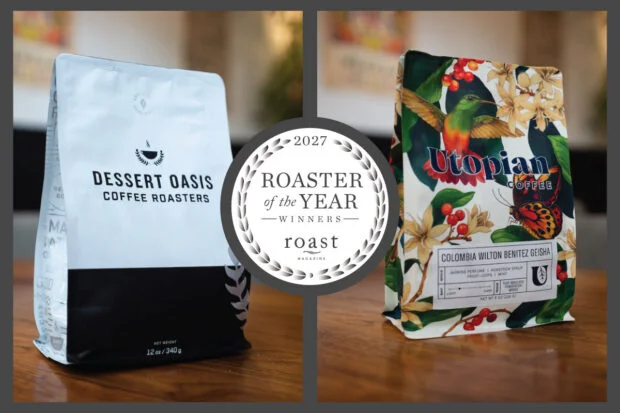
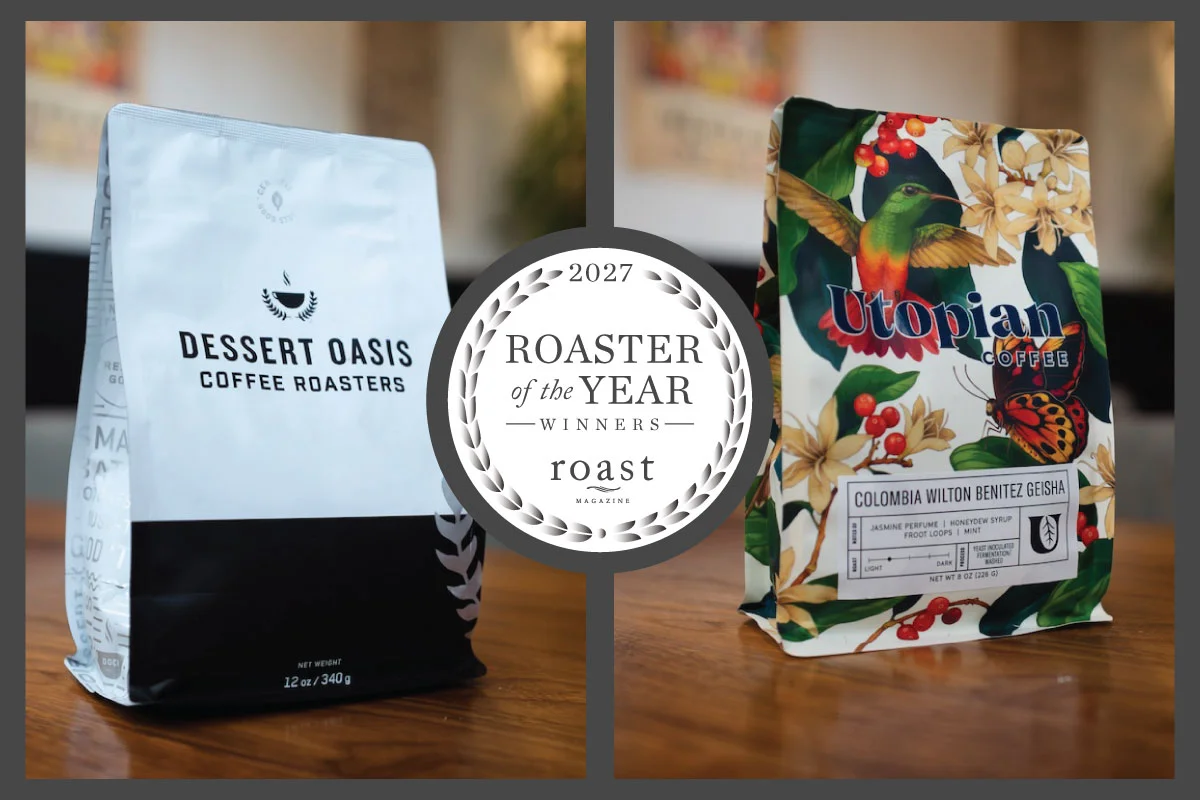
Two approaches to growth in specialty coffee
The 2027 Roaster of the Year awards point to two different ways specialty coffee companies can grow while investing in quality and people. Michigan’s Dessert Oasis Coffee Roasters won the Micro category, while Fort Wayne, Indiana-based Utopian Coffee took the Macro honor. Roast magazine announced the winners in its November/December 2026 issue.
The pairing makes the awards more useful than a simple ranking. Dessert Oasis’ operation joins retail, production and education within a regional business; Utopian’s account centers on sourcing and staff systems at a much larger production scale. Those distinctions matter because practices that work for a smaller roaster may need different staffing, processes and infrastructure when output rises.
The awards, now in their 23rd year, divide entrants by annual output: Micro honors go to roasters producing fewer than 100,000 pounds, while Macro recognizes those above that mark. Judges consider coffee quality alongside sustainability, education for employees and communities, and commitments to diversity, inclusion and equity.
That breadth gives the award a wider frame than roast quality alone. A roaster’s choices affect how coffee is purchased, how employees learn their jobs and how waste is handled after production. Those subjects are difficult to reduce to a single measure, so the award’s value rests in considering them together.
Other finalists were Chocolate Fish Coffee Roasters, Idle Hands Roasting Co. and Indie Coffee Roasters in the Micro category. Macro finalists included Corvus Coffee Roasters and Dean’s Beans Organic Coffee. The finalists also show that the recognition spans companies with different operating models, even within the same production bands.
Dessert Oasis links retail, training and production
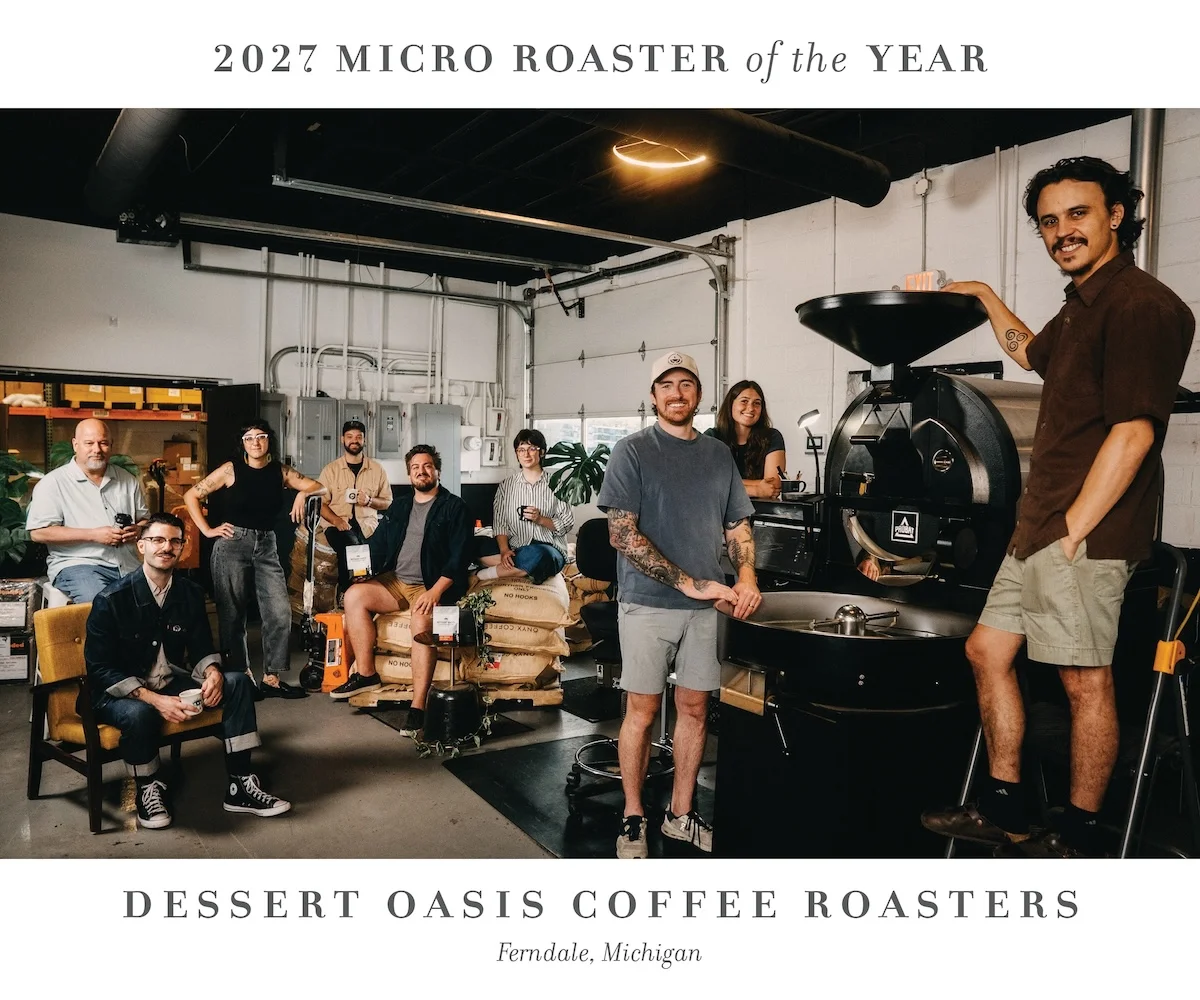
Founded in 2009, Dessert Oasis roasts about 68,000 pounds of coffee each year. Owner, president and director of coffee Nathan Hamood leads the Michigan company, which runs shops in Rochester, Royal Oak, Ferndale and Detroit. Its 9,000-square-foot Ferndale headquarters brings the roastery together with a bakery, distribution operations, quality control and staff training.
Putting these functions under one roof can shorten the distance between production decisions and the people serving customers. It also creates a busy operating environment: roasting, baking, distribution and training each make different demands on space and staff. The Ferndale site is therefore more than a production address; it’s a place where several parts of the business meet.
The company pairs long-term purchasing relationships with producers and exporters with practical waste and energy measures, including electric delivery vehicles, coffee-waste reuse, bulk coffee options and efforts to reduce food waste. Taken together, these measures address different points in the business, from how coffee is sourced to how it reaches customers and what happens to leftover material.
That combination is more significant than it looks. Sustainability programs can sound abstract when they’re described only as goals; concrete operating choices make them easier to connect to daily work. The source doesn’t quantify the effects of these steps, but their presence across purchasing, delivery and waste suggests that Dessert Oasis is treating the issue as an operational practice.
It also supports staff benefits and career development through a dedicated Education Department, which trains employees, wholesale partners and members of the wider coffee community. Public classes, employee participation in industry events and Detroit Coffee Week extend that work beyond the company. Education becomes part of the roaster’s relationship with its customers and local industry, not simply an internal onboarding function.
Production practices center on carefully developed roast profiles and weekly cuppings. Dessert Oasis uses Probat profiling software to monitor consistency and bring out each coffee’s character. Regular tasting gives the team a way to assess results across batches, while profile tracking can help connect adjustments to what the coffee tastes like in the cup. That’s a practical feedback loop, though the source provides no further detail about how the company measures consistency.
Utopian scales regenerative sourcing and staff development
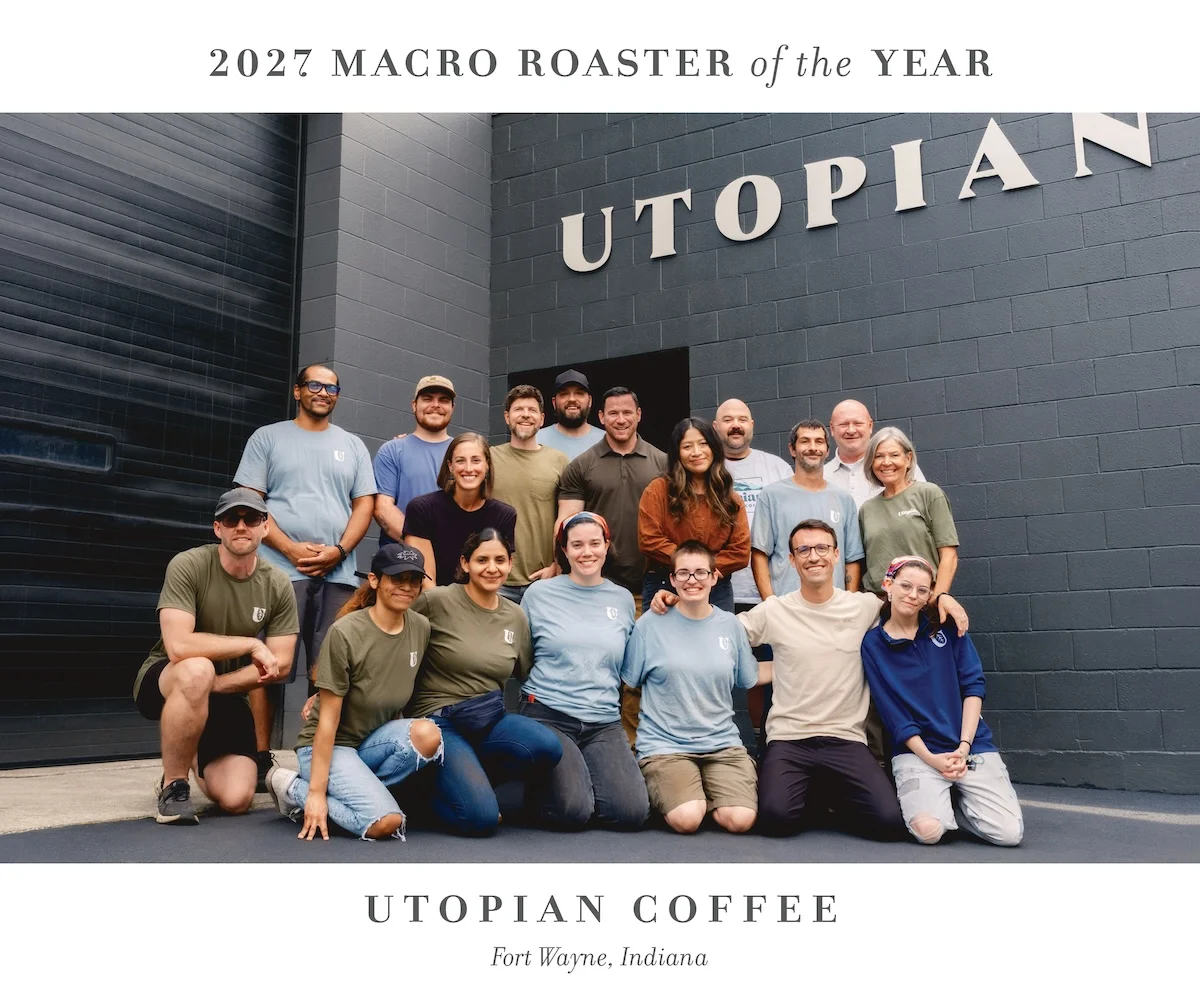
Utopian Coffee’s annual production is 987,946 pounds, placing the company firmly in the Macro category. Cousins Brendon Maxwell and Patrick Smith founded the Fort Wayne roaster in 2006. Its sourcing model emphasizes lasting producer relationships and regenerative agriculture; Utopian says it has bought more than 1 million pounds of Regenerative Organic Certified coffee.
The volume makes the sourcing claim central to the company’s identity. Long-term relationships can give a roaster continuity in its supply, while a focus on regenerative agriculture ties purchasing to how coffee is grown. But a certification or stated purchasing total doesn’t, on its own, explain the effects for each producer. The useful point here is that Utopian describes sourcing as an ongoing relationship rather than a series of isolated buys.
Those relationships include work on soil health, biodiversity and farmer livelihoods. At its 30,000-square-foot roastery, Utopian composts coffee and food scraps, recycles, reuses chaff and burlap, and works with local organizations on waste reduction and community projects. The practices connect farm-level concerns with the company’s own facility, giving the sustainability effort a wider scope than sourcing alone.
Its quality program spans experimental lightly roasted microlots and the Regenerative Organic Certified Obsidian dark roast. That range suggests the company is working across distinct customer preferences while maintaining attention to coffee evaluation. Green coffee screen grading and UV inspection help the team evaluate lots and provide practical feedback to producers. The feedback is a link between quality control and sourcing: evaluation can inform conversations about the coffee, though the source doesn’t specify how often or in what form those exchanges happen.
As output has grown, Utopian has revised production workflows, created clearer advancement tiers for employees and written operating procedures with production staff input. Scaling often puts pressure on communication: processes that once depended on informal knowledge can become harder to carry consistently across a larger operation. Written procedures and staff participation offer one way to preserve practical knowledge while giving employees a role in shaping how work gets done.
A dedicated lab supports staff development, tailored wholesale training and public coffee education. That facility gives training a defined home within the business, serving employees as well as wholesale partners and community members. If you’re working in this space, the interesting question is how these programs keep pace with production demands as the operation grows. Here’s the thing: capacity is only part of scale; the company also has to keep quality and training legible to the people doing the work.
What the awards suggest about scale
The two winners offer distinct examples of how roasters can connect sourcing, production and education at different scales. Dessert Oasis’ integrated Michigan operation emphasizes the proximity between shops, roasting and instruction. Utopian’s much higher output brings forward the systems needed to manage production, supplier relationships and staff development across a larger business.
Neither example proves that one model can simply be copied by another roaster. The resources, locations and production needs differ, and the award material doesn’t provide a common set of measurements for comparing the results of each company’s programs. Still, the shared emphasis on people and process offers a useful signal: quality is being presented as a business practice that extends beyond the roast itself.
And yet, recognition is only a snapshot. The more telling test will be whether these commitments remain part of daily operations as companies change, whether they’re serving a regional customer base or producing at close to a million pounds a year. For both, the award recognizes work that reaches beyond the cup to the people and communities involved in producing and serving coffee. Not just the coffee.



Discussion
Sign in to join the discussion.