Kansas City’s Coffeekris links roasters with 11 importers, pairing a broad coffee portfolio with transparent sourcing and an ethics-first approach.
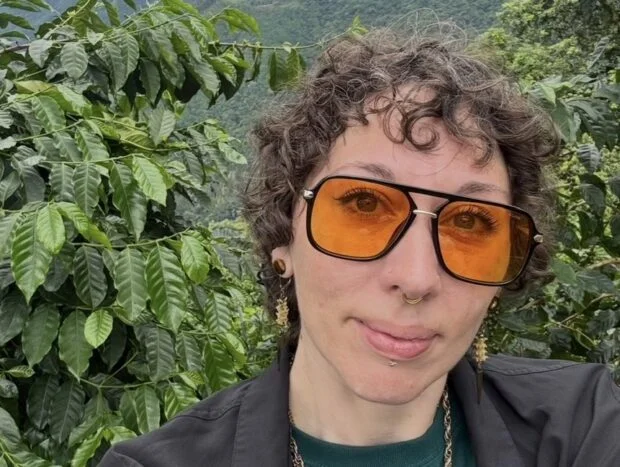
Kris Carlson built Coffeekris around a practical idea: roasters can reach a broad network of green coffee suppliers through one knowledgeable contact, without paying a markup for the introduction. Since launching the Kansas City business in 2025, she’s assembled 11 importing partners and sold more than 10 containers’ worth of coffee in its first year, far beyond her cautious initial goal of one.
The model draws on Carlson’s experience across cafes, roasting, wholesale, sourcing and green coffee sales. She calls her role “sourcing curator.” Coffeekris acts as an authorized representative for specialized importers, connecting roasters with coffees from different origins and suppliers. Importers pay Carlson for those connections; roasters pay the same prices they would by buying directly from the importers.
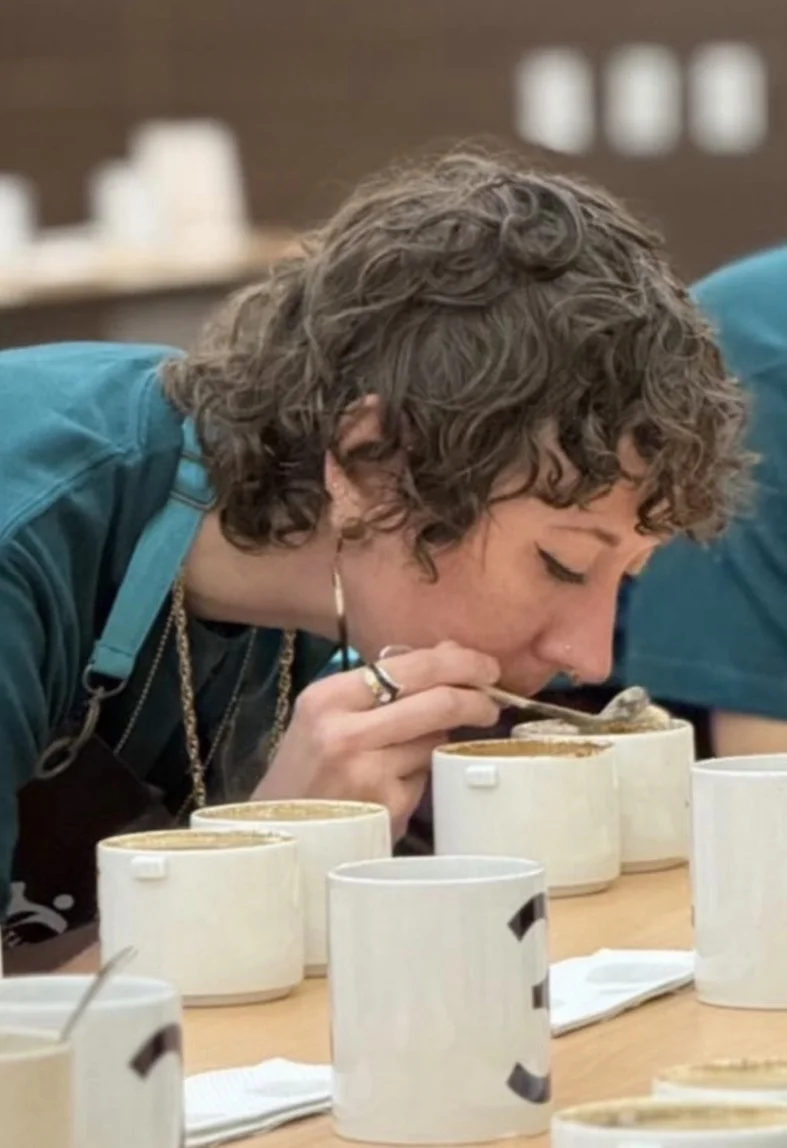
Coffeekris Founder Kris Carlson cupping coffee. All images courtesy of Kris Carlson.
A sourcing network built on openness
Carlson sees transparency as a defining feature of the business. “Unlike most brokers, I’m transparent,” she told Daily Coffee News. “You know exactly who I’m working with, why, and where the coffee is coming from. There’s no gatekeeping knowledge.”
The network includes Swift Coffee Sourcing, founded by Emily McIntyre; Optimist Coffee Traders, founded by former Mighty Peace co-founder Jim Ngokwey; and Benchmark Coffee Traders, founded by Vikram Patel. Another partner is Swift Coffee Sourcing. The portfolio spans coffees from around the world.
Screenshot
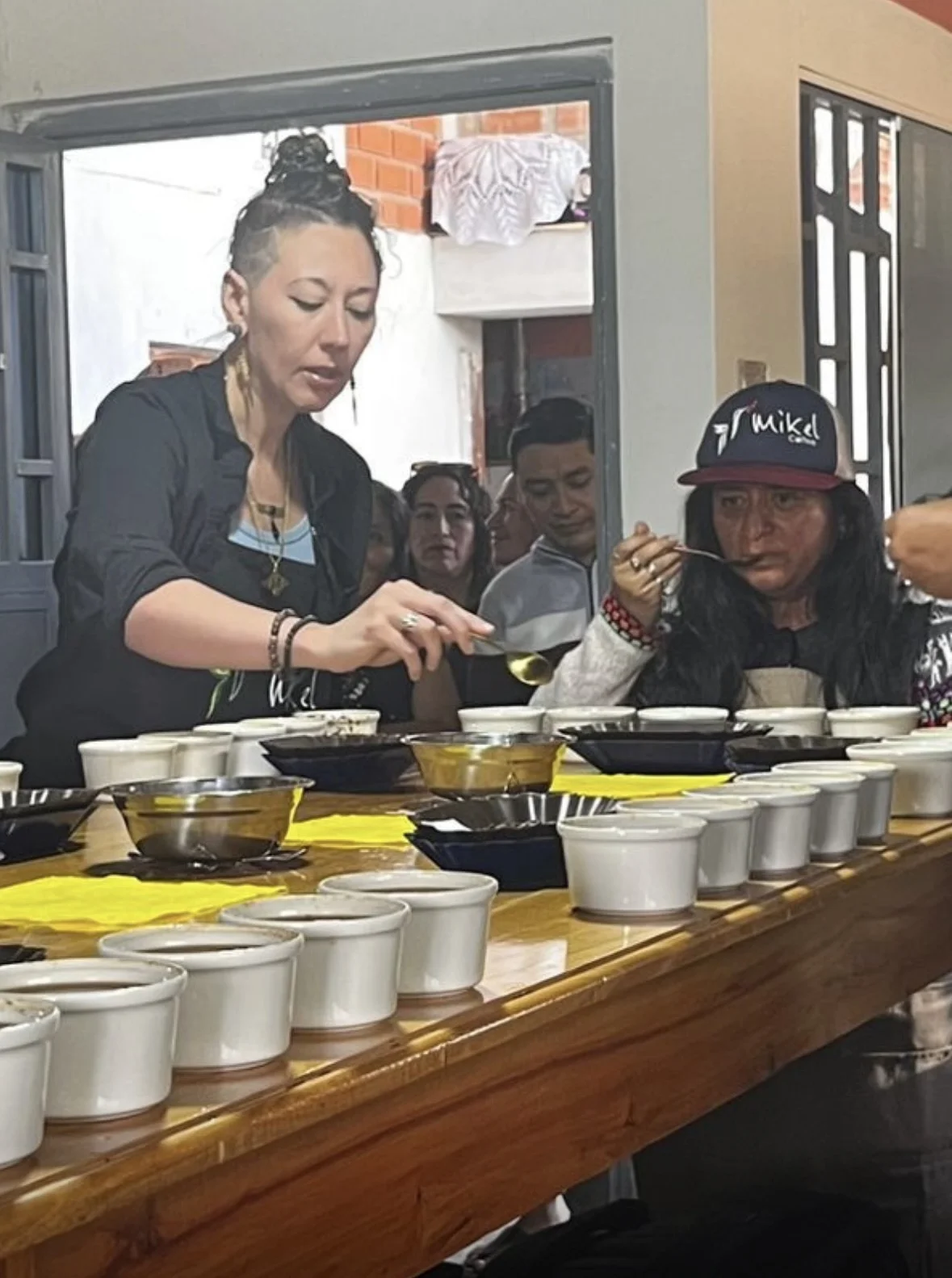
She intentionally seeks out importing companies led by women and people from historically underrepresented groups. At the same time, the network needs enough range to serve different business sizes, from a roaster purchasing a few bags to one ordering commercial volumes. Carlson says she can work with buyers ordering “two bags, two pallets, two supersacks, or two containers.” Her condition is that partners treat every participant in the trading system ethically.
That combination of access and scale is central to Coffeekris’s proposition. A small roaster can get help navigating a range of suppliers without needing to build each relationship from scratch. Larger buyers can also use the network. The approach gives Carlson a role in matching buyers and coffees while keeping the underlying supplier relationships visible.
From cafe work to origin relationships
Carlson’s route into green coffee began in Kansas City, where she was drawn to work that brought art, music and community together. A music and art major, she started as a barista at Take Five Coffee + Bar, an Overland Park cafe and venue that closed in 2015. She later joined Revocup Coffee Roasters, an Ethiopian-founded roasting and retail company in the Kansas City area.
Screenshot
Revocup shaped both her career and her understanding of coffee’s supply chain. “Learning where, and more importantly who, coffee came from planted a seed in me — a desire to understand the global trading system well enough to advocate for its evolution toward equity, and to make exploitation extinct,” she said.
The company also supported Carlson through a major personal loss. Six months after she joined, her mother died by suicide. Carlson said Revocup’s owners, colleagues and wider community helped her through grief. “Revocup changed the course of my career, but I can’t talk about what it did for me professionally without talking about what it did for me as a person,” she said.
Her responsibilities grew from cafe work into management, roasting and wholesale. She competed as a Glitter Cat Roaster, volunteered as a stage manager for the U.S. Coffee Roasters Championship and received industry scholarships, including a 2022 Diedrich Roasters scholarship through the Coffee Roasters Guild.
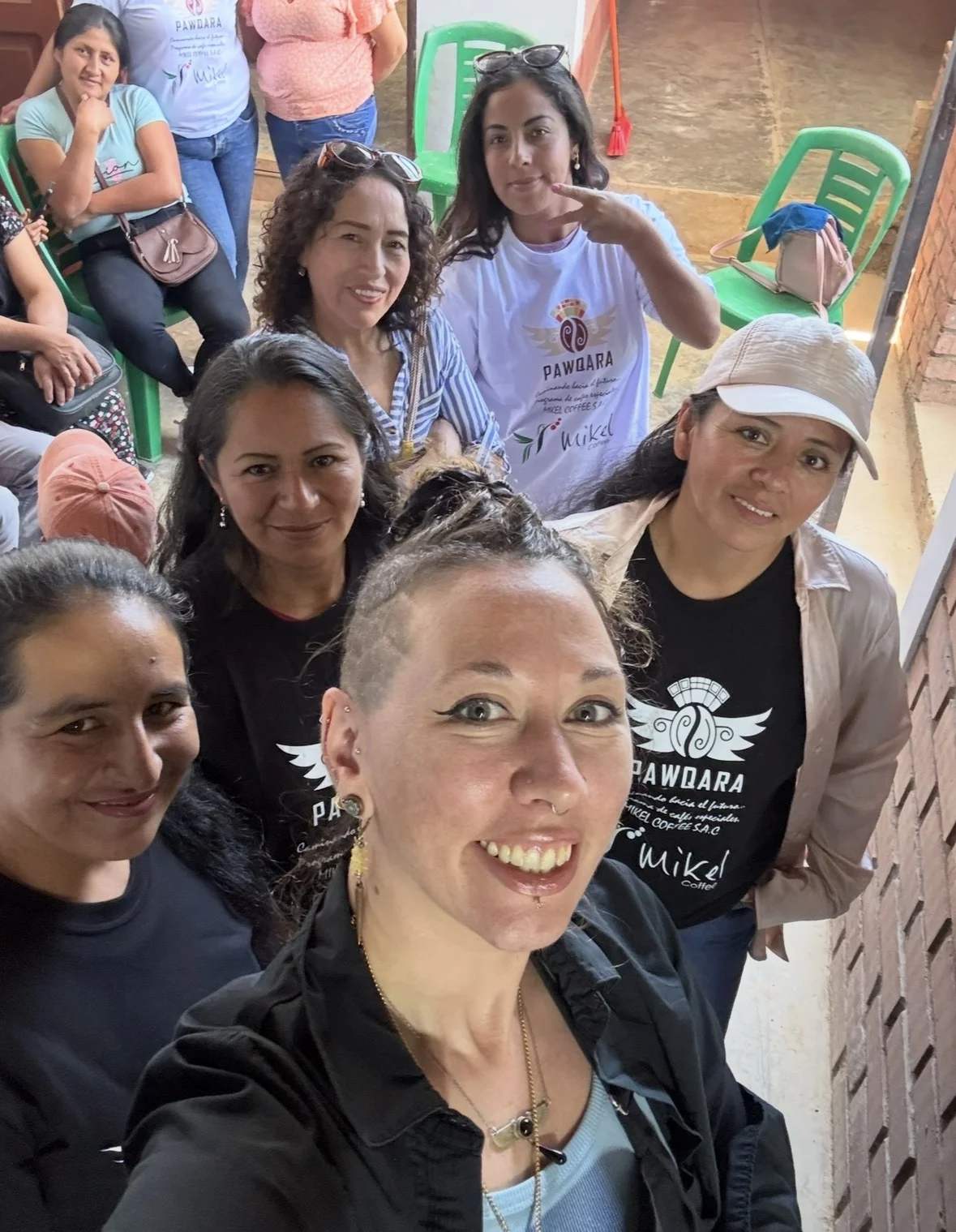
Green coffee became the next step. Carlson worked for Mighty Peace Coffee, an importer focused on the Democratic Republic of Congo that has since ceased operations, and later joined Anthem Coffee Imports. Those roles took her to producing regions in Latin America, East Africa and Asia, where she cupped and selected lots and built direct relationships with producers and exporters. “Every phase taught me something different,” she said.
Growth, and the work behind it
Carlson expected Coffeekris to sell the equivalent of one container in its first year. Sales passed 10. She credits the growth to relationships developed over years in the industry, while describing the result as hard won. She recalled being told by a room of men that she wasn’t capable of succeeding. “I hold this success with humility and with pride,” she said. “Do not confuse that with ease. Starting your own business is never easy.”
Her enthusiasm for the work is tied to seeing people she once admired from afar become business peers. She also wants equitable business practices to prove their value over time. In her view, a competitive mindset can obscure shared opportunity: helping another person succeed doesn’t reduce what’s available to anyone else.
She remains troubled by sexism in the coffee trade and by the professional cost of calling out mistreatment. Carlson says women and others outside the industry’s familiar power networks often have to work harder to be considered, while reports of unfair treatment can shift scrutiny onto the person who spoke up. The result, she argues, is a loss for the wider industry: buyers may overlook good coffee and strong ideas because they come from people they don’t expect.
That perspective informs her choice of partners and her emphasis on treating buyers with equal respect, regardless of order size or job title. It also explains why Coffeekris’s sourcing work is as much about who gets access to business relationships as it is about which coffees appear in a catalog.
Beyond coffee
Asked what she might do outside the industry, Carlson imagined returning to music and art, paths she felt too afraid to pursue in her twenties. If she had to leave coffee tomorrow, she said she’d train as a BMX coach and run clinics for girls and women.
For now, her focus is building a sourcing business from relationships that already span origins, importers and roasters. Coffeekris’s first-year sales suggest demand for that connector role. Its longer-term test will be whether the business can keep growing while preserving the openness and ethical standards Carlson says made her build it.


Discussion
Sign in to join the discussion.