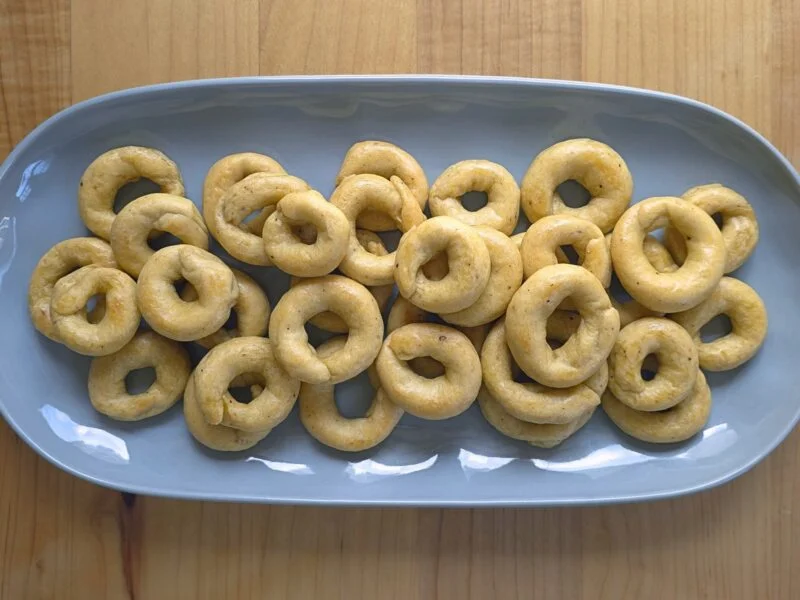
Discover how to create authentic taralli with the perfect blend of durum flour, black pepper, and olive oil for a delicious Italian snack.
The moment I first tasted taralli, I found myself captivated in my mother-in-law's kitchen, savoring a batch from a delightful Italian bakery in Rhode Island. The unique blend of black pepper, olive oil, and just the right hint of white wine in these ring-shaped crackers was a revelation. Since that day, every time I spot taralli at her gatherings, I have to exercise considerable self-control to avoid finishing the entire bowl. Naturally, I couldn't resist the urge to replicate this culinary delight in my own kitchen. Initially, I opted for water over white wine, which yielded results that were only passable. However, this time, I was determined to achieve authenticity. I used white wine and replaced all-purpose flour with premium durum flour, transforming the flavor profile entirely. The rich, nutty undertones of the durum flour paired beautifully with the complexity the wine brought to the table. Though alternatives like fennel seeds or red pepper flakes also work well, nothing quite matches the punch of black pepper in my opinion. Don’t skimp on quality olive oil either; it’s essential. Interestingly, taralli originate from Puglia, the "heel" of Italy, which proudly holds the title of the nation’s largest olive oil producer.
Photo Gallery
-
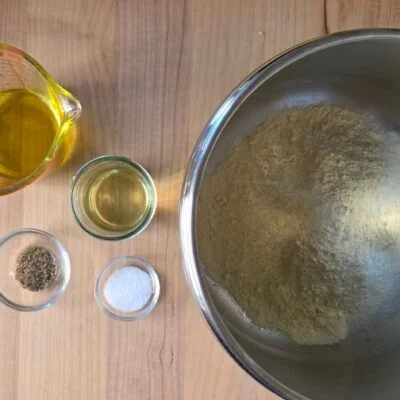
- Ingredients, black pepper version
-
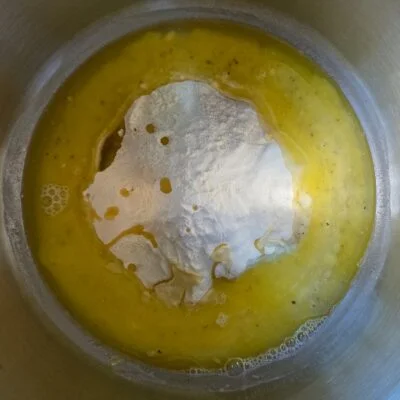
- Ready to mix
-
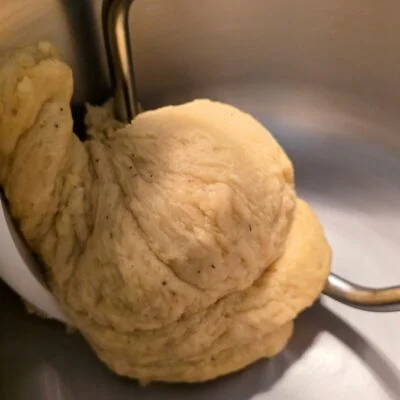
- 5-10 minutes mixing or kneading
-
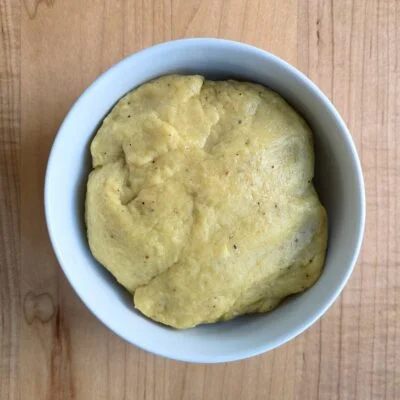
- Rest the dough
-
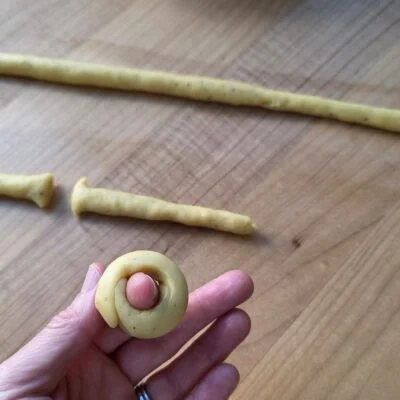
- Shaping taralli
-
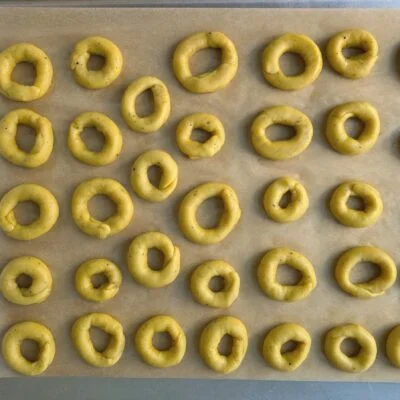
- Ready to boil
-
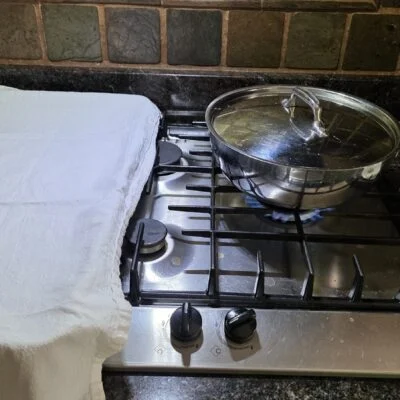
- Salted boiling water, tea towel for draining
-
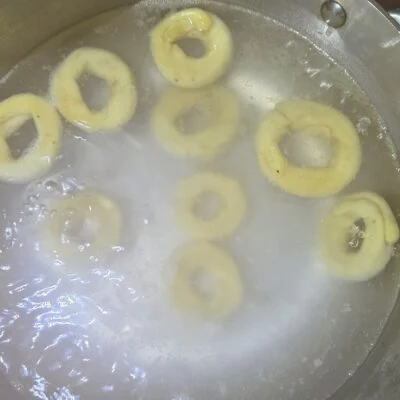
- Floating in 1-2 minutes
-
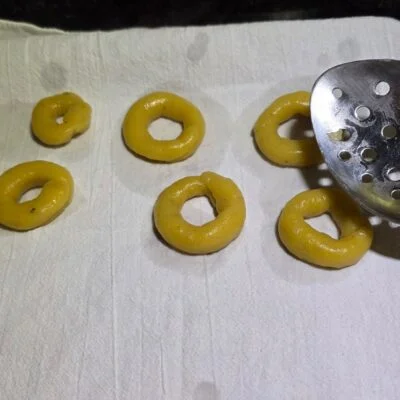
- Draining on towel
-
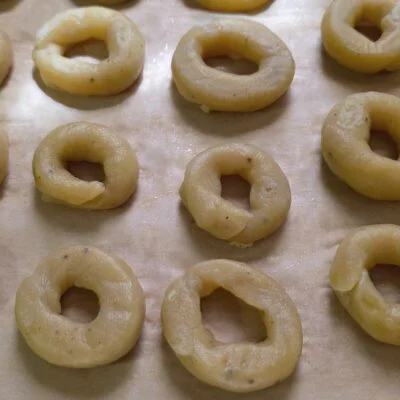
- Moved back to baking sheet
-
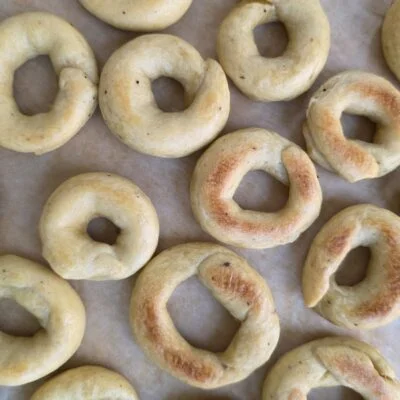
- Baked 40 minutes, flipped partway
-
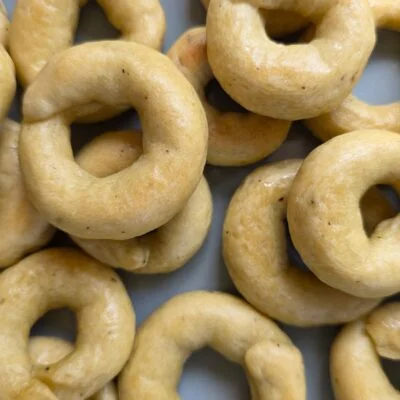
- Close up
Italian taralli crackers are characterized by their savory flavor and satisfying crunch, making them an ideal addition to any charcuterie board or as a standalone snack. The process begins with hydration using dry white wine and olive oil—essential ingredients that contribute to their distinctive taste. After forming the dough into rings, they undergo a brief boiling phase before baking. You can experiment with flavors such as black pepper (my personal favorite), fennel seeds, red pepper flakes, or keep them plain.
Servings
~ 36 taralli crackers
Ingredients
- 290 grams extra fancy durum pasta flour or any flour of your choice (2 1/4 cups)
- 135 grams dry white wine (1/2 cup + 1 1/2 Tbsp) *
- 80 grams olive oil (6 Tbsp or ~1/3 cup)
- 1 tsp salt (5.5 grams)
- 1 tsp cracked black pepper - or - 1 Tbsp fennel seeds - or - 1 tsp red pepper flakes
- For boiling: 1.5 - 2 quarts water + 2 tsp salt
Instructions
- This recipe requires about 2 hours from start to finish. Mixing and kneading take about 10 minutes. The dough needs to rest for 20-30 minutes, while rolling and cutting it into rings will take another 20-30 minutes. Boiling adds another 10 minutes, followed by a baking time of 40 minutes.
Mixing and Resting
- Combine the dough ingredients and knead until the mixture is supple and cohesive. A mixer with a dough hook can also be used; the final dough should be soft and slightly oily but not sticky.
- Cover the dough and let it rest for 20-30 minutes.
- Prepare a clean workspace for shaping the taralli and line a baking sheet with parchment paper.
- In a pot, bring water and salt to a boil just before shaping the dough.
Shaping, Boiling, and Baking
- Refer to the Photo Gallery for a visual representation of this process.
- Cut a portion of the dough, rolling it into a long tube less than 1 cm thick. Divide the tube into pieces approximately 4-5 inches long.
- Form each piece by tapering the ends and joining them to create rings with slight overlap. Place them on the parchment-lined baking sheet, continuing until all dough has been shaped.
- Preheat the oven to 375°F for convection or 400°F for standard bake.
- Set up a clean tea towel near the boiling water for draining.
- Boil 8-10 taralli at a time in the salted water, stirring gently. They’re ready once they float to the surface, typically in 1-2 minutes.
- Using a slotted spoon, remove the taralli and set them on the tea towel to drain.
- Continue boiling the remaining taralli. When finished, return boiled ones to the parchment-lined baking sheet; avoid leaving them on the towel too long to prevent sticking.
- Once all are boiled, place the baking sheet in the oven, baking for 40 minutes at 375°F (or 400°F). Halfway through, flip the taralli for even cooking without burning the bottoms.
- Let them cool on a rack.
- Store taralli in an airtight container for up to two weeks. They may soften, but can be re-crisped in the oven if desired.
Notes
* Adjust the amount of wine based on the type of flour used. If you're curious about the alcohol content remaining post-baking, this article from Idaho State University discusses evaporation rates during cooking.
Product Offerings and Pricing
What we're seeing here is a digest of items that capture both utility and pleasure for the home baker. Take the **Organic Extra Fancy Durum Pasta Flour**, priced between **$10.10** and **$87.95**, depending on the quantity. This variability suggests a tiered pricing strategy aimed at appealing to both the casual cook and the serious gourmet. For a product rooted in high-quality ingredients, such pricing isn’t just expected; it reflects a broader consumer trend towards premium, artisanal cooking products. [Explore the flour here.](https://breadtopia.com/store/organic-extra-fancy-durum-pasta-flour/)
Moving on, the **Danish Dough Whisk — Large** carries a straightforward sticker price of **$15.00**. With a stellar rating of **4.91 out of 5**, it’s no surprise this item has quickly become a favorite. It’s efficient and durable—attributes that resonate well with bakers aiming for both ease and quality. The whisk's performance contributes to its popularity, making it a worthy investment. [Check this whisk out here.](https://breadtopia.com/store/danish-dough-whisk/)
On the equipment front, the **Ankarsrum Assistent Original Stand Mixer Essential Package** is a significant entry at **$749.95** and boasts a high consumer rating of **4.88**. This product's multiple color options, coupled with its premium positioning, represent an ongoing shift in consumer expectations. Customers today aren’t just looking for functionality; they want an appliance that aligns with their kitchen aesthetic. [Learn more about this mixer here.](https://breadtopia.com/store/ankarsrum-mixer/)
Alternative Options and Accessories
Let's not overlook the necessity of mixing bowls in any cooking setup. The **Stainless Steel Mixing Bowls — Set of 3** can be yours for **$29.00**. These bowls aren't just practical; they represent a standard essential without unnecessary frills—perfect for tasks from meal prep to serving. [Find these bowls here.](https://breadtopia.com/store/stainless-steel-mixing-bowls-set-of-3/)
Lastly, the **Breadtopia Bread and Pastry Board** is priced at **$155.00**, emphasizing quality craftsmanship suitable for serious bakers. The nearly perfect rating of **4.92 out of 5** speaks volumes about customer satisfaction and trust in the brand. This board is not only functional but also a handsome addition to any kitchen counter. [Explore more about this board.](https://breadtopia.com/store/wood-bread-board/)
In summary, the assortment of products detailed here isn’t merely about baking; it’s about investing in tools that enhance both the experience and the end product. This shift toward higher-quality items mirrors broader consumer demands for authenticity and reliability in kitchen essentials. If you’re in this sector, keep an eye on these trends. They're redefining what quality means for the everyday consumer.Looking Ahead: The Future of Kitchen Tools
What’s happening in the kitchen tools segment is more than just consumerism; it’s a reflection of how baking enthusiasts are evolving. As products like the Resin Handle Bench Knife and the Magnetic Measuring Spoons gain popularity, it suggests that home bakers aren't just looking for functionality, but also a sense of experience and enjoyment in their craft.
Take the Bench Knife, priced at $15.25, a modest amount for a tool that can significantly ease dough handling. Its popularity indicates users are willing to invest in quality tools that enhance their baking experience. This might point to a larger trend: the DIY food movement is not merely about the end product; it’s about the process and the joy it brings. If you’re in this market, catering to this sensibility could give you an edge.
The product listings, from Parchment Paper Sheets at $29 for 200 sheets to the versatile Magnetic Measuring Spoons for $15, highlight a shift toward thoughtfully designed tools. These aren’t just items for sale; they are essential components for creating something beautiful and delicious at home. There’s a clear opportunity here to engage with customers on the emotional aspects of cooking, which hasn't traditionally been the focus for kitchenware brands.
Furthermore, these trends could mean more competition ahead. As brands become aware of this growing market, you'll likely see innovations that blend technology with traditional baking tools. For instance, imagine smart measuring tools that sync with recipe apps to ensure precise measurements or tools that inspire creativity through design.
So, here's the takeaway: if you're navigating the kitchen supply landscape, consider how you can tap into these evolving customer desires. It's not just about selling tools; it's about selling the experience of baking itself and being part of a community that values craftsmanship and creativity. Embrace this shift, and you won't just keep pace; you might just lead the charge.
Discussion
Sign in to join the discussion.