Delightful Freekeh-Medjool Date Salad Recipe for Any Occasion
Published Sep 28, 2026Reads 720Desk Noha Elbadry-Cloud
Experience a vibrant freekeh-Medjool date salad that combines unique flavors and textures, perfect for any meal or gathering.
Introducing the Freekeh-Medjool Date Salad
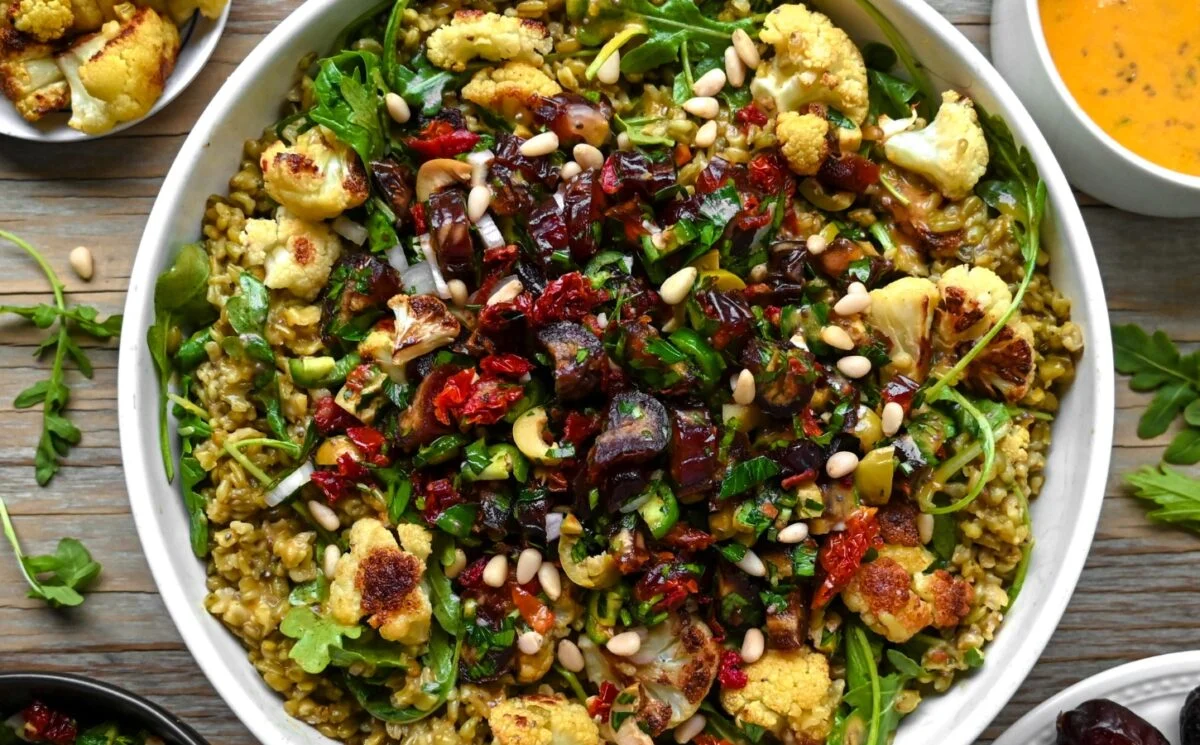
This vibrant freekeh-Medjool date salad isn’t just another dish; it’s a delightful blend of textures and flavors crafted to excite your palate. At its heart is chewy freekeh—an ancient whole grain derived from young durum wheat—this salad stands out with its nutty backbone. Freekeh has been celebrated in various cultures for thousands of years, primarily in the Middle East. It has a flavor profile that’s often likened to barley or brown rice but with an earthy twist. That richness elevates this dish from a mere side item to a meal that can command the center of your dining table.
The ingredients work together harmoniously to create a balance that caters to a range of tastes. Roasted cauliflower brings a satisfying crunch and a hint of caramelization, which contrasts beautifully with the peppery arugula—a leafy green that’s often underappreciated outside of niche culinary circles. The heart of the salad lies in its sweet-savory salsa, a medley of Medjool dates, sun-dried tomatoes, shallots, fresh parsley, and olives. The sweetness of the dates works well to complement the umami flavors presented by the sun-dried tomatoes. And if you’re feeling adventurous, a squeeze of lime juice for tang or some chopped serrano pepper for a spicy kick transforms the dish entirely, providing layers of flavor that dance on your palate.
To tie everything together, a preserved lemon dressing introduces a bright, citrusy note that cuts through the sweetness of the dates and richness of the olive oil. This element exemplifies the salad's complexity; preserved lemons are frequently used in Mediterranean cuisine, adding a depth that’s often absent in more conventional dressings. Texture-wise, chia seeds enhance the salad, offering a pleasant bite that contrasts with the softer elements.
This salad isn’t just a stand-alone delight; it’s also versatile. You can serve it at room temperature, as a quick lunch option, as a side dish at gatherings, or as part of a larger meal spread. Its adaptability means it can easily fit into various dining scenarios. Top it off with toasted pine nuts for a finishing touch; their buttery flavor adds richness, while the crunch provides yet another layer to the dish. And, for those who enjoy an extra layer of flavor, consider placing more dressing on the side.
Recipe Context
Rooted in the pages of *The Vegan Middle Eastern Cookbook* by Noha Elbadry-Cloud, this recipe draws inspiration from North African, Levantine, and Arabian culinary traditions. Each component of the salad not only serves to create an appealing visual presentation but also embodies flavors that range from the familiar to the exotic. Such culinary mash-ups are gaining traction as more people seek to expand their palates beyond conventional western dishes. In a world where people are often looking for new experiences, this salad offers just that—it's visually appealing and rich in flavor, which makes it both unique and comforting at the same time.
If you’re looking to switch up your salad game, give this one a try. You might just find it becoming a staple in your meal rotation. Readers eager for a culinary adventure will appreciate the full recipe, which serves as an excellent exploration of plant-based cuisine. This particular salad could well be a springboard into a wider exploration of plant-based dishes that honor diverse culinary traditions while introducing new ingredients into your kitchen.
And this isn't merely about ingredients; it offers a narrative about connections through food. Each layer of flavor speaks to the traditions they stem from, presenting an opportunity to engage with the broader cultural heritage of the Middle East.
Read more: Kaleidoscopic Quinoa Salad
If you’re intrigued by the idea of plant-based diets reflecting global traditions, you’ll want to explore Elbadry-Cloud’s work. Her cookbook isn’t just a collection of recipes; it serves as a window into a culinary world that many may not have experienced yet. Check it out on [Amazon](https://www.amazon.com/Vegan-Middle-Eastern-Cookbook-Irresistible/dp/1645678865) and dive deeper into these flavors that promise to enrich your cooking and dining experiences.
Implications and Future Outlook
This kind of culinary exploration emphasizes how food is evolving to meet diverse dietary preferences while also preserving history. As consumers gravitate toward plant-based diets for health or ethical reasons, they're also eager to discover dishes that are rich in context and flavor. In many ways, the freekeh-Medjool date salad exemplifies this trend. It’s more than just a nice dish; it reflects our growing interest in food as a vehicle for cultural understanding.
What does this mean for chefs and home cooks alike? If you’re working in this space, adapting traditional recipes by infusing them with global ingredients will likely resonate with many. People are becoming increasingly aware of the nuances of different cuisines; they appreciate dishes that tell a story.
In a practical sense, the incorporation of ingredients like freekeh might encourage a shift in how we approach grain preparations. If this dish gains popularity, it could usher in a new wave of interest in ancient grains, which have often been overlooked in favor of more refined options. The success of such recipes might influence what goes into grocery store aisles as demand increases.
The underlying message here is simple: food is evolving, and adventurous eaters are leading the charge. This salad, with its unique blend of ingredients, represents a crossroads of tradition and modern culinary practices that’s only likely to expand in the years to come.


Discussion
Sign in to join the discussion.